When Expertise Becomes the Scarce Resource
Can technology extend the reach of engineers across airline fleets and other essential infrastructure?
By Darren Foster CEO Artemis Structural Intelligence
"A Best Educated Guess"?
In 2012, during a port investigation, I asked an engineer how he had reached a decision that could affect whether critical infrastructure remained operational. He explained that he had gathered all the available information and made a “best educated guess”.
That answer haunted me...
the engineer was an experienced professional carrying considerable responsibility, working with the limited information we could put in front of him.
Having spent years in commercial diving and structural inspection, I understood what gathering that evidence involved. Divers undertook difficult, sometimes dangerous work, yet the results could still leave an engineer trying to understand a large underwater structure through isolated observations.
I found that difficult to accept! Here I was exposing professional divers to high levels of risk and then the engineer was required to make consequential decisions from an incomplete picture. Could we give the engineer better evidence without continually placing people in harm’s way?
Attempting to Remove Engineering "Guess Work"
The question led to me spending three years in the USA to build ASIS (Automated Structural Inspection Scanner), my first attempt to change the process. I set out to use robotic inspection to capture as much available data we could from the structure, combining phased array underwater scans with a three-dimensional laser scan to build out a digital representation. The intention was to retain inspection evidence throughout the asset’s life, make it accessible to engineers and maintenance teams, and connect it with corrosion analysis and finite-element modelling.
We did not call it a digital twin at the time, although readers would now recognise much of that thinking. What mattered to me was that the effort of an inspection should produce something an engineer could rely upon.
ASIS was also mechanically complex, ambitious and extremely capital-intensive. We could not raise the funding required to bring the full system into operation. The commercial failure had serious consequences that continued for years. It is an uncomfortable part of this story, but it shaped what followed: I had to reconsider the solution while still believing the problem deserved an answer.
The Extent of the Problem.
Over time, I began to see that problem well beyond the water. An airline engineering team responsible for aircraft operating across several continents faces its own version of it. A finding at an outstation may need a specialist’s assessment before the aircraft can return to service. The specialist needs reliable evidence, the aircraft’s history and enough context to understand what has changed. Meanwhile, scheduled maintenance and other findings continue to compete for the same people.
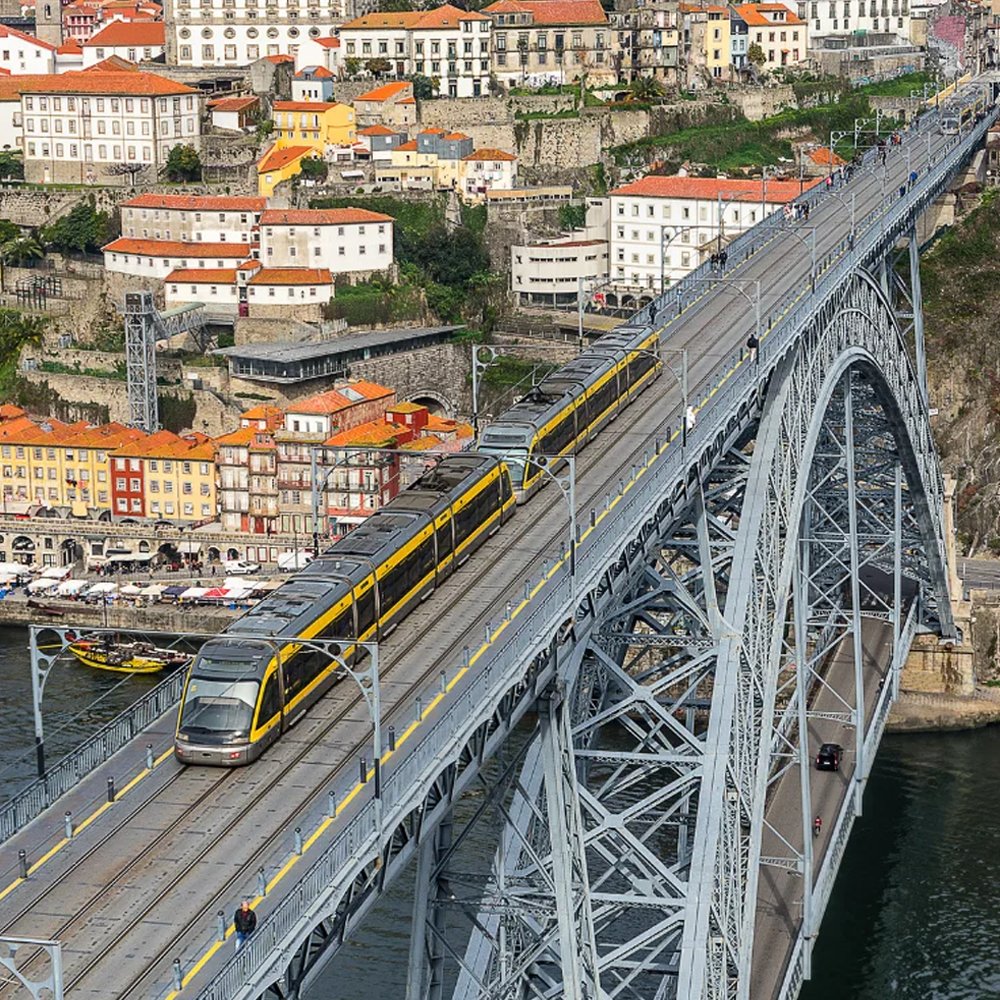
For an infrastructure owner, the geography may involve bridges, tunnels and port structures spread across a region. Access can require traffic management, specialised equipment or a shutdown. Sometimes, much of the effort goes into reaching the location where a measurement can finally be taken.
These pressures are developing alongside a difficult workforce transition. The Aviation Technician Education Council’s 2026 Pipeline Report recorded a record 11,103 new mechanic certificates issued by the FAA in 2025. That is encouraging. Yet the same report cited a projected North American shortfall of approximately 20,000 certificated mechanics by 2030. More people are entering the profession, but demand and retirements continue to place pressure on the supply of qualified staff.
The assets themselves also require sustained attention. The American Society of Civil Engineers’ 2025 infrastructure assessment reported that approximately 45 per cent of US bridges had exceeded their planned design lives of 50 years. Age alone does not determine whether a structure is safe but keeping it in service requires informed maintenance and engineering oversight.
Recruitment and training remain essential. However, a qualification begins a professional’s development; the practical judgement accumulated over decades takes longer to replace. As experienced people retire, the immediate constraint is often qualified human attention.
This is where technology can become a force multiplier.
Technology - A Force Multiplier
I use that term to mean something quite specific: increasing the useful capacity of a skilled person while leaving authority and accountability with them. A system earns that description when it removes work that otherwise consumes the hours needed for interpretation, investigation and decisions.
Force Multiplier: increasing the useful capacity of a skilled person while leaving authority and accountability with them.
Consistent measurements are a starting point. If evidence is captured in a repeatable way and compared with an established baseline, an engineer has a better opportunity to identify meaningful change. Properly validated analysis can help distinguish environmental variation from changes that warrant investigation. It must also make uncertainty visible; an unexplained signal still needs attention.
Reliable evidence can then travel to the specialist. For airlines, that could support collaboration between a local maintenance team and an engineer elsewhere in the network. For infrastructure operators, it could allow a specialist to review readings from several sites before deciding where a visit or further investigation would be most useful.
There is a longer-term benefit in preserving the history behind those readings. Staff change, contractors move on and reports become separated from the assets they describe. A consistent record gives the next person a starting point without requiring them to reconstruct years of inspection work. It also gives experienced engineers something tangible to use when teaching their younger colleagues.
The Artemis Force Multiplier
Artemis grew out of this thinking.
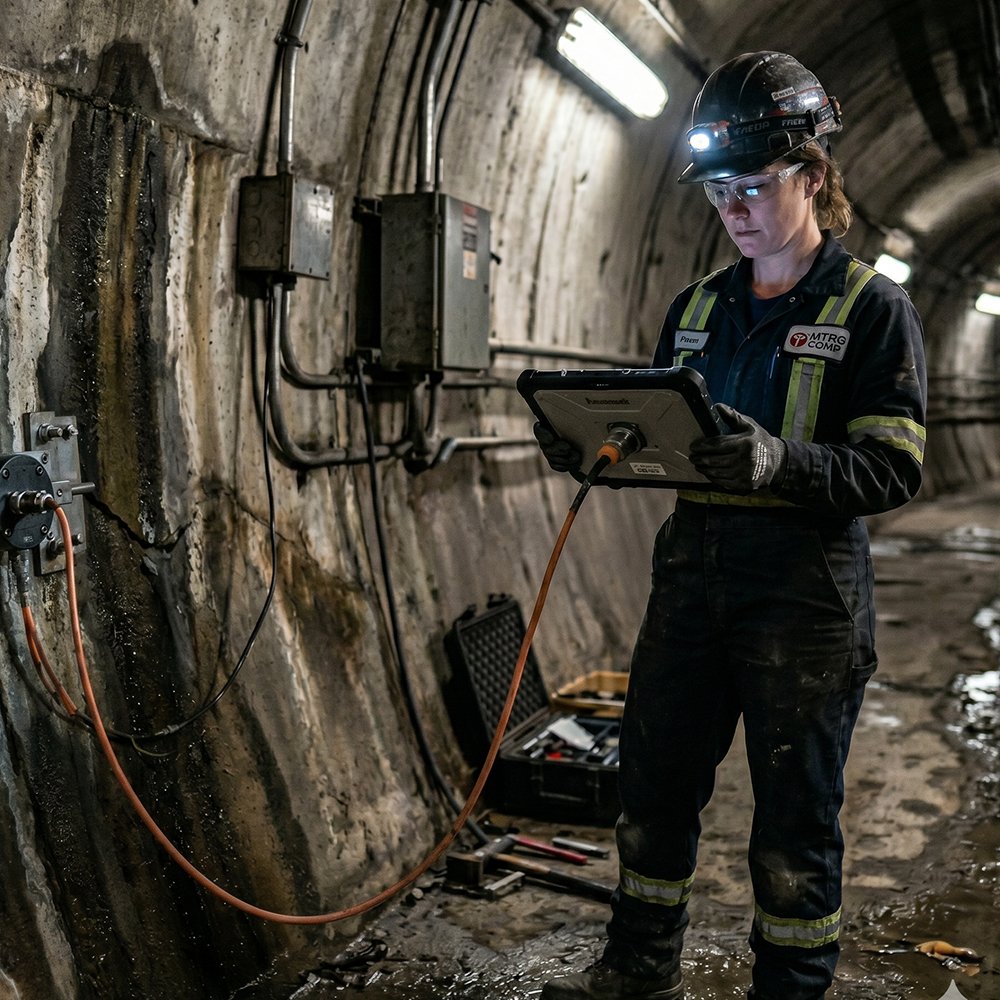
Our approach now uses permanently bonded piezoelectric sensor arrays at selected structural locations. An operator connects an external reader, captures an interrogation in under one second and transfers the data to a central repository for analysis and engineering review. Subsequent measurements can be assessed against the structure’s own baseline and earlier readings.
The person collecting the measurement does not need to be the engineer interpreting it. That separation is central to the model: routine acquisition can happen locally, while specialist expertise is brought to the evidence. The engineer still determines what the result means and what action is justified.
ANZEN by Artemis
ANZEN is our aviation application of that approach. For airlines and their maintenance partners, its potential lies in reducing the repeated access and information-gathering burden at suitable monitored locations. Those savings must be demonstrated for the application, taking account of installation, reading collection, review and any follow-up inspection.
Our tunnel deployment provides infrastructure field experience, including evidence of acquisition reliability and environmental compensation under operating conditions. It helps us understand how the system behaves outside a laboratory. Aircraft applications require their own validation and approvals; tunnel experience cannot establish aviation certification. Replacing an inspection prescribed by an FAA Airworthiness Directive would require an approved alternative method of compliance for that requirement.
For an airline executive or infrastructure owner evaluating technology, I would begin with the working day. Where does the engineering team’s time actually go? How much is spent finding earlier reports, arranging access or collecting another measurement? When an experienced employee leaves, how much knowledge leaves with them?
The answers provide a practical basis for investment. A faster reading has limited value if it creates more work downstream. A useful system needs to deliver evidence that people can trust and act upon, within the maintenance and assurance processes they are responsible for.
The return may be an engineer able to oversee more assets, a technician with time to investigate a difficult finding, or a senior colleague available to guide someone still learning. These are forms of capacity that deserve to be measured alongside equipment costs and inspection times.
I still think about that engineer at the port. His answer brought home the responsibility we place on people when we ask them to decide whether something can safely remain in service. Better technology should give them a firmer basis for that decision.
I began by asking whether we could keep a diver out of the water. The question has since grown larger: how do we place the right engineer beside every structure that needs their judgement, even when they are thousands of kilometres away?